
A Plant, Some Chemistry, and the Sun!
I’m a gardener. It’s in my genes. I grew up in a home landscaped by my great-grandfather (Benjamin Widmer, 1880-1958), whom we call a botanist but he was probably just knowledgable and precise with his plants. I have his hand-made concrete birdbath. I have some of his surprise lily bulbs that pop up every year. There have been generations of women in the family who have cultivated the soil for food and beauty.
All of this to say if I can be outside, especially in the spring, I will be. Morning espresso with the birds, dirt under my fingernails from pulling weeds (who am I kidding?), digging, planting, watering, harvesting.

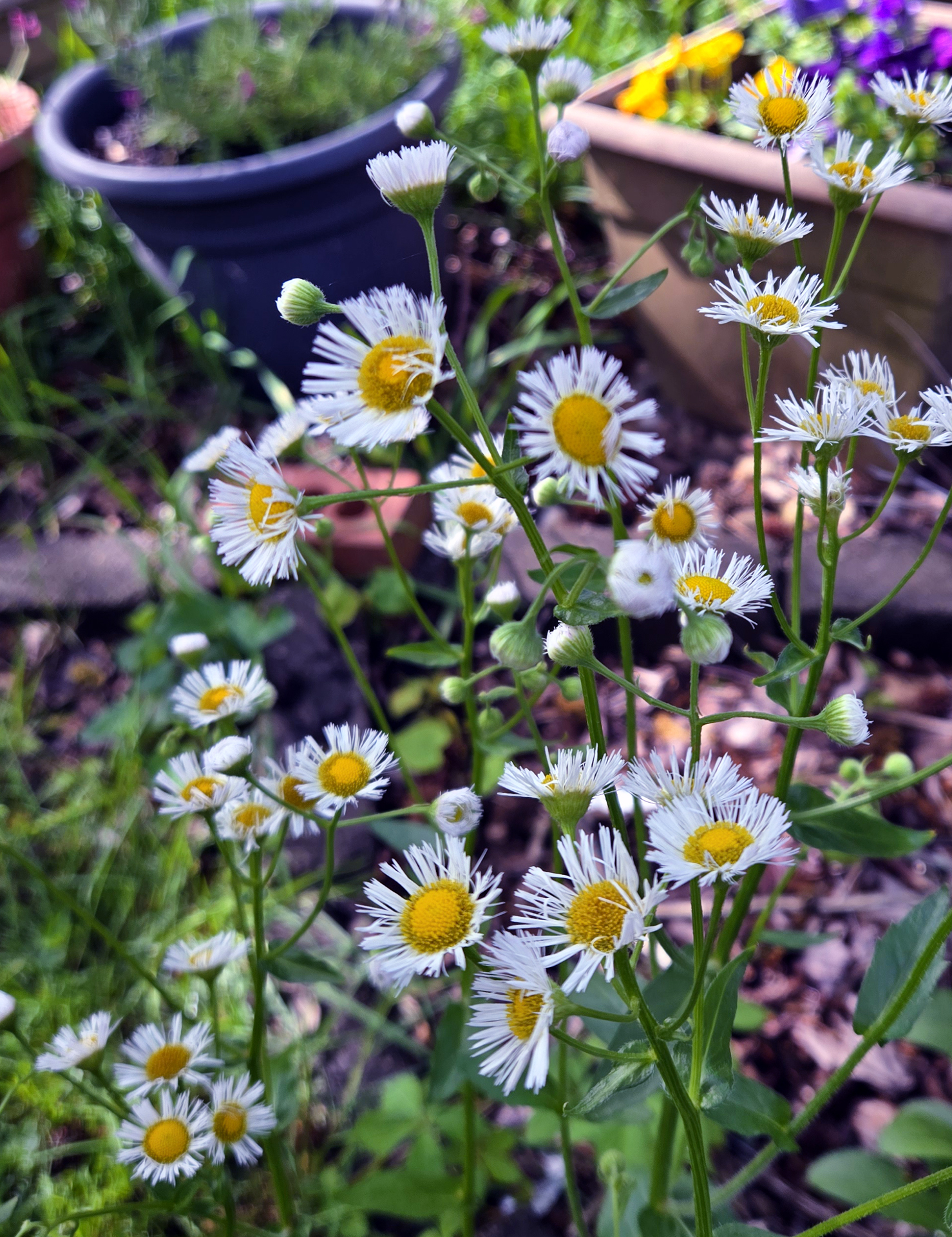
Spring offers the artist the most wonderful opportunities. This year I’m planning a dye garden for my tapestry wool, but first I wanted to chase the spring sun to expose cyanotype photograms. (More on the dye garden later.)
Cyanotypes are the oldest form a wet photography. The concept is simple. Paper or cloth (or even sea shells) are coated with a chemistry. Objects or plants are placed on the coated substrate, then exposed to the sun and developed with water. You might have made “sunprints” at camp. Same thing. That was an introduction to a more complicated and expressive art form.
Spring sun is gentle. It’s the perfect time to create this art. Like all analog processes, it takes time, patience, and little experience and experimentation. The chemistry is science; the exposure is art. A spring exposure is about 13 minutes in full sun. Compare that to 2 minutes in late June or July! Or 45 minutes in December, if you or your materials don’t freeze first!
St. Louis in April is unpredictable. Rain, tornados, frost, blaring heat — sometimes all within 24 hours. To make spring art outside you have to watch the weather, have your materials prepared, clear your calendar, and GO! The new growth in spring is irresistible! The sun is elusive!
Yesterday was the day. Rain for days before, predictions of storms after, but there was a window. There was talk of clouds in the afternoon, so morning it was. Excellent. Cool but sunny.
A quick stroll around the yard offered daisy fleabane, columbine, lavender, pansies for the exposures. I have pots and pots of ferns, but those can wait until spring flowers are gone. The day before, while it rained, I coated some tea bag paper with the chemistry, and found some scrap cotton to work on. I had saved several dozen used tea bags, dried them, opened and emptied their contents, and cleaned them. The paper is delicate and transparent.
I had plans in the afternoon, so a full morning of work was planned. Gather the plants. Arrange a composition in diffused light. Close up the contact frame that holds everything in place. Open it up again to fix materials that shifted. Find the spot that has unfiltered sunlight. Move it again. Time it. Check for exposure. Removed the exposed paper or fabric.
Here’s the real magic of cyanotype: pop the thing in water. Plain water. Watch it develop. No darkroom needed. A shaded part of the yard is fine. Over the course of minutes, a photograph emerges, and darkens and improves as it dries.
Art is found in a backyard garden and 19th century chemistry!
Next time: let’s stitch the cotton cyanotype with some sashiko stitching!
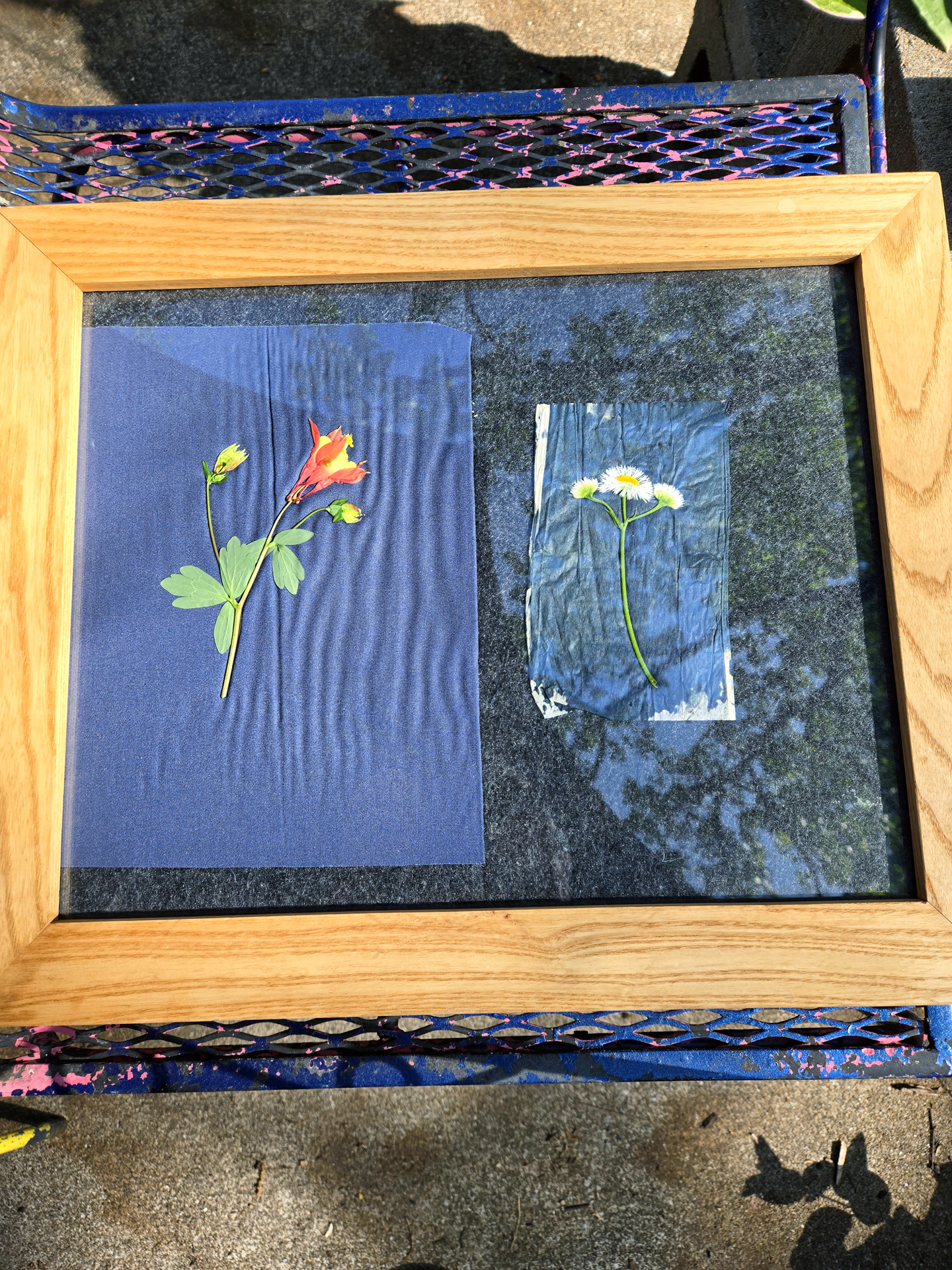

Left: Columbine on older coated cotton, and daisy fleabane on freshly coated tea bag paper in the contact frame soaking up the sun. Right: A morning’s work drying in the stiff breeze, hence the rocks!


 Jeane Vogel Art