>If They Gave Awards for Art Fairs…

>
If they gave awards for art fairs, then Marion Art Festival and Deb Bailey would win one.

What are we waiting for? Let’s create one. Let’s call it the Nancy Saturn Memorial Award and give it those art fair directors who care about artists only more than than care about art. We’ll give it to directors who want to bring the best art to their community, who treat the artists with respect, who want more than to line their pockets… well, you get the idea.

I should back up a bit. Who was Nancy Saturn and why name an award after her?

Nancy was the owner of the American Artisan Gallery in Nashville. She died in March 2010 of breast cancer — a cancer she thought she beat years ago.

Nancy and her husband Alan were well known as philanthropists and lovers of art and fine craft — and artists and fine crafters — far beyond their Nashville home. For the last 40 years, Nancy and her team hosted the American Artisan Fair in Nashville’s Centennial Park on Father’s Day weekend. An artist could apply to be in the show, but Nancy hand picked and invited the artists.

Once at the show, the artist was Nancy’s guest. She visited each of the 200 or so artists during the 3-day show. On the first night of the show, she opened her home to the artists for a feast worthy of a wedding. She told us what she liked. She told us what to work on. She was generally right.

More than that, Nancy cared about the quality of the show, the quality of the work and the needs of the artist. She fed us, she encouraged us, she nurtured new artists, she commiserated with the old artists.

She knew the power of art. The show has donated more than $1 million to Gilda’s Club of Nashville, to support people with cancer. Most of us donated work to be auctioned off for Gilda’s Club to supplement the fair’s contributions.

Nancy’s daughter, Samantha, and her team continue the tradition. This year’s fair, June 18-20, will be especially poignant. Nancy is gone. Alan died a few weeks before last year’s fair. And Nashville has been devastated by spring floods. We miss Nancy and Alan and wish only the best for Nashville families who are recovering. We will come to Nashville and hope our art will hasten the healing.

So why give this award to Deb Bailey?

Deb, with her team, runs the Marion Art Fest, in Marion IA. It’s a small town near Cedar Rapids. It’s a gem of a show and Deb pulls together 50 artists from all over the country to share with her fellow Iowans.

Now don’t be confused. Iowa is a not back-water flyover state, contrary to the opinion of some jaded city folk. It is a stated filled with some of the most educated and sophisticated art-lovers in the US. They know art, they like art, they buy art. And they count on Deb to bring the best and most varied work to their town. And she does.

But more, she cares about the artists. Her emails are personal and fun. Her directions are clear and specific. Her rules are minimal but intended to put on the best show possible and annoy the artists the least.

She markets the show. She brings in the right patrons. She feds us dinner and hands us a glass of wine. She makes artists feel valued and welcomed. Trust me, we don’t get that very much.

Congratulations, Deb. The first Nancy Saturn Memorial Award for Excellence in Art Fair Management goes to you. And thank you for setting the bar so high for all of us.

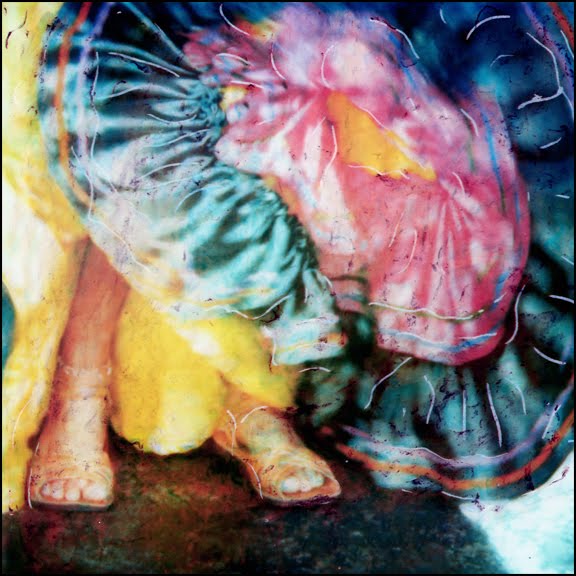
Artwork pictured: Last Stroll, ©2010 Jeane Vogel, Polaroid Painting.

Posted in Art, Art Saves Lives, Awards, Fairs, NewWork, Polaroid, Soap_Box, Stories | 2 Comments

>What If My Work is Boring?

>I had two fears heading to a recent trip to Costa Rica. One, was a fear of heights. I’ll write about that later.

The second was that the work I would do there would be boring.

I traveled as a chaperon on an 8th grade Spanish class trip. I wanted to travel with my daughter (nine days, no fighting, personal record), brush up my Spanish a bit and, of course, shoot. A photographer always shoots.

But there was a nagging worry: what if I came back with dull, lifeless work? I was on a tour and not in control of my schedule. I had to shoot when I could, not hold up the group, and still find time to be inspired and thoughtful. What if my work looked like everybody else’s – the same old shots of a Latin America country?

I had three goals:

1. Make some Infrared images, which are difficult under the best circumstances. Infrared requires a tripod, long exposures and often many, many shots to get it right. I didn’t have much time.

2. Capture images that would stand alone as fine art, and some that I could copy onto Polaroid film back in the studio.
3. Take typical touristy pictures for fun.

I knew I could make the images, but how could I make them uniquely mine? I think every artist goes into new projects with deafening self-doubt. What if all that other work is a fluke? What if I have to be in my “safety zone” to make art? What if I’m a fraud?

These worries are the curse of the artist who tries to put meaning and soul into every piece. The artist who makes “pretty pictures” has not a care in the world. He already knows what he’s going to do. He’s done it thousands of times before.

Three days into the trip I knew what I wanted to capture. There’s a saying in Costa Rica that means “no worries.” You hear it everywhere. Pura vida. The bus is broken down. Pura vida. We’ll get it fixed. It’s raining. Pura vida. But’s not cold. The ice cream has melted. Pura vida. Now it’s like a shake.

Pura vida. Literally, it means “pure life.” That simple idea dismissed the fear of coming home with boring work. How could it be boring? I put my soul into it. Pura vida.

New work pictured:
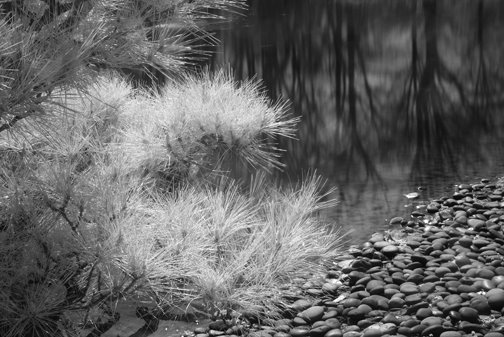
Pura Vida #6, Infrared Photograph, ©2010 Jeane Vogel

Bailarina #1 (Little Dancer), Polaroid Painting, ©2010 Jeane Vogel

Posted in Art, Infrared, NewWork, Polaroid | 2 Comments

>Art is Great, But Is it a Profession?

>I was supposed to be something important when I grew up… a constitutional lawyer, actually. That was my dad’s plan for me. He starting educating me and grooming me for a career as a civil rights defender when I was about 10.

That’s also about the time I drew the little mouse that I found on the ad on the back of a matchbook and sent it in to the correspondence art school.

Whoa! You should have heard the yelling when my dad was called by the school and asked to pay for the art lessons I had “qualified” for.

Art is great, but it’s not a profession.

I didn’t go to law school (was two weeks away when I came to my senses and just couldn’t go). I never gave up art, but it took me many, many years to become a full-time studio artist.

Art is great, but it’s not a profession. Or it’s a profession for somebody else. Somebody with money … or access to it. Lots of it.

Why is this still haunting me? Why does it permeate a lot of our thinking?

Why? Because we don’t really value art in our culture. We certainly don’t value artists.

A couple of weeks ago I was at a party talking to someone I didn’t know. The room was filled with people who had committed their lives to improving the world. Some are nationally known for the causes they have championed.

This stranger turned to me: What do you do, she asked.

I felt myself getting sheepish. That’s a new experience for me. But still, I was a little embarrassed.

I’m an artist.

Really? She was impressed and wanted to hear about all it.

Now, don’t get me wrong. I’m proud of my work, but at that moment, I felt intimidated by the power in the room. Lots of those people I knew well and they don’t think I’m an idiot or unimportant. At least they don’t say that to my face. Many of them collect my work.

So why did I react that way?

Because in a dozen ways, every day, we get this message: Art is frivolous. Art is a hobby. Art is not important. Art is not a profession.

Don’t believe me? How much education funding has been cut from art departments in the last 30 years? How many schools have art education (or music or acting) as part of the core curriculum? Any? How many parents want their children to grow up to be artists?

Well, art is important, art is a profession, art is not frivolous. I can’t do anything about art education and I can’t change people’s attitudes, but I can make art.

I can make art with an intention to keep it meaningful, expressive and thoughtful. I can strive for excellence in craftsmanship. I can be willing to talk about the inspiration behind the work.

Art is important. Artists are important. As a culture, let’s try to value both.

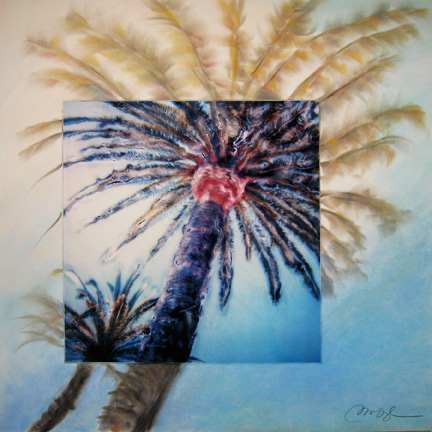
Savannah Breeze, Polaroid Painting, ©2010 Jeane Vogel

Posted in Art, NewWork, Polaroid, Soap_Box | 5 Comments

>Screw Up Your Courage & Get Your Work Out There

>

Superior View, Hand-altered Polaroid Photograph, ©2009 Jeane Vogel

Working artists, inspired artists, hungry artists produce a lot of work. Some of it is wonderful. Some of it is not.

How do we tell the difference?

I use a time-honored technique. I ask my husband, of course, and my daughter. They love everything. Even if they don’t, they tell me they do. My ego gets stroked.

Sadly, that’s where lots of artists stop. Amateur artists, even professionals, don’t ask for real critiques. Maybe they don’t want to know. Maybe they know and don’t want to face it. Maybe they don’t want to do the work to get better.

Maybe they are just afraid.

Submitting work to be judged against the work of others is a frightening prospect. The fear of rejection is a poison dart to creativity.

And the fear of rejection can be boiled down to one simple component: you don’t like me! That’s what we do to ourselves. Our work reflects ourselves. If you don’t like my work, you must not like me. I’m worthless. I’m stupid. I’m bad.

Oh good grief! No wonder therapists have such full schedules.

SNAP OUT OF IT! It’s not personal.

It’s the work, not the person, that is liked or not. And art is subjective. The same work can receive multiple rejections and acceptances in the course of a year or two.

And when you think about it, it’s not the rejection that’s so difficult, but the fear of it. The thought that we MIGHT fail that stops us from submitting work to a juried exhibition or seeking out a new gallery.

What’s the cure? It’s simple. Just do it. Gather your best work, write the check and submit to a juried show. Do it again. And again. And again.

Talent, vision, execution — these are all vital parts of being an artist. But they are worthless if you don’t exhibit your work. And, unless you own your own gallery, you cannot exhibit your work without submitting it to the judgment of others. Art isn’t a pretty picture — it’s communication. It has to been seen. It has to be discussed. It has to be examined.

Will you get rejected? I can almost guarantee it.

Will you get accepted? If it’s good enough, yes.

Will you learn from the experience? If you’re brave enough, you will.

Posted in Art, Exhibits, Nature, NewWork, Photography, Polaroid, Soap_Box | 3 Comments

>Art Saves Lives — Again

>I was in my 20s when I was thunderstruck with the idea that art saves lives.

It’s not an original idea. It predates writing; probably predates languages. It’s uniquely human.

And being uniquely human, art has an impact on every part of our lives. Every minute. Art saves lives.

I’m not talking about art therapy, which is important. I’m talking about ART. Creation. Imagination. Using materials at hand to communicate an idea so complex or personal or elegant, that common speech will fail.

This week I was privileged to be Artist-in-Residence at the national conference of the National Federation of Families for Children’s Mental Health in Washington. I led a photo workshop for the Youth Track, teens and young adults who attended with their parents or alone. They are advocates for proper education and treatment for young people with mental illness. They work every day to remove the stigma of mental illness.

My job is simple. I introduce the materials. I suggest some techniques. I encourage them to think deeply about what they want to say in their finished piece. We have one day.

It’s during the shooting phase of the workshop that I get to know them a bit. If the group isn’t too big, I can work one-on-one, helping each get the kind of images they want. After the film is developed, the real creativity begins. The materials are basic: glue sticks, scissors, mat board, colored paper, tissue paper, whatever is at hand. They get one instruction: create your story.

Every time I do this workshop, I am blown away by the results. Without limitations, each artist creates something spectacular! I watched commentaries emerge: peace, how teens seem to have no control of their lives, living in shadows, dreaming of freedom. One artist used the actual film negatives to frame his work. It hurt me, an old film photographer, to see negatives damaged, but I got over it as I watched the power of the piece emerge.

We installed the work in a public place at the conference the next day. It would have taken me 5 minutes and no drama to install the work alone. I asked the group to do it instead. It took an hour. There was drama. The final installation, like many installations, was a work of art in itself. It was far better than I would have done.

Art saves lives. For this group, art inspires lives too.

Posted in Art, Art Saves Lives, Exhibits, Soap_Box, Stories, Workshop | 2 Comments

>Cleansing My Palate

>At least once a day, someone comes into my studio/gallery at Crestwood Court and marvels: “ALL this work is yours? You did all this?”

Well…, yes. But I didn’t do it yesterday. I agree it’s varied: hand-altered Polaroid photos, Infrared photos, mixed media pastel paintings, everday ceramics, silver jewelry, and most recently, votive candle scupltures from hand-made paper.

The work in my studio represents years of work. I work everyday. EVERYDAY. Hundreds of thousands of hours of work. The good art goes in the gallery or an art fair or, I hope, someone’s home or office.

The bad work goes in the trash. My critics may disagree, but I am ruthless in examining my work. I toss a lot. A lot. One day, I’m worried someone will find the cache of rejects and marvel with distain: “YOU did all this?” Yuck. My reputation will be ruined!

I think one of the things that people are surprised about is the variety of work in the gallery. Many artists have one style, one body of work. They are known for it. That’s what they do. It’s successful. They stay the course.

I have a couple of bodies of work that I’m known for — mostly notably hand-altered Polaroid photographs. I love that body of work. It continues to evolve and grow. As long as I can find film, I will work with medium.

Sometimes I have to break out of it, though. Ten years ago, frustrated that I couldn’t thrown a clay pot, I took up ceramics. I love the mud. I’m not great, but it’s a medium I can use when I need it. I’ve been heard to say that as a potter, I’m a very good photographer! But my berry bowls and ikaebonas are very popular and I’ll be putting new items in the gallery this fall.

I’m working on a special new project that demanded hand-made paper. Sure, I could buy it, but it’s so much more special if the papermaking is part of the completed piece of art. Most recently, I’ve picked up silversmithing. I’ll make jewelry, sure, if just to feed my own habit. But I want to incorporate silver into mixed media pieces. So I have to learn it.

Most of us artists have visions far beyond our abilities or talent. If we’re brave, we will try to give those visions life. The more and varied skills the artist has, the greater the chances that the vision will materialize in a vibrant piece of work.

Sometimes working with a different medium — making paper or throwing a pot instead of making photographs, for example — is like eating a light sherbet between two dinner courses with strong flavors. It’s like cleansing the palate. Creating a different art form is a way of clearing out the creative dust and making room for new ideas.

Working with more than one medium broadens my artistic vision and keeps work fresh and exciting. That means constant learning and experimenting too.

So yes, all this work is mine. It’s okay for an artist to do more than one thing, isn’t it? It’s okay for ALL of us to be more than one thing.

Posted in Art, NewWork, Soap_Box, Technique | 4 Comments

>Looking at Old Work with New Eyes

>

Peace Luck Love #8, Infrared Photograph, ©2008 Jeane Vogel

Peace Luck Love #9, Infrared Photograph, ©2008 Jeane Vogel 

Photographers want instant gratification. Even as we used to toil for hours in a darkroom, we wanted to see our work right away. In the film days, if it took a day or more to process the five rolls of  PlusX we just shot, it was much too long. We ran from the shoot to the darkroom. We wanted it NOW! And that was before the days of 1-hour photo kiosks!
That’s probably why Polaroid, then digital, was embraced so quickly. Instant gratification.
Serious photographers shoot hundreds and thousands of images per month. We edit the images we shoot shortly after. We process and print the ones we like. We shoot some more. We move on.
Once in a while, I look back over old images. And every once in a while, looking at the old work with new eyes, I find exceptional work that I rejected. It’s as if I’ve created new images!
In spring 2008, I started working on a series of introspective Infrared photographs I call Peace Luck Love. The Infrared heightens the mood of the work.
Last weekend, I decided to revisit the discarded images and process a few. I found four additional images in that series that once looked ordinary. With a bit of time behind them, the images popped at me.
Instant gratification … all over again.
Posted in Art, Artist QuickFix, Infrared, NewWork, Technique | 3 Comments

What Kind of Disgusting Person Does This?

It’s true: I’m not a great business person. I’m an artist. I don’t want to trick or coerce someone into collecting my work or scheduling a wedding. I want my business model to be a partnership, to fulfill a need, to inspire a smile or a thought or a memory.

I try to be a strong businesswoman, but I’m not aggressive or impassive enough. I can’t bring my self to justify any action with an “it’s just business” attitude.
Sometimes I wonder where our business ethics have gone. I know most people are honest and hardworking. Some just aren’t. Some are willing to toss people aside to get their buck.
When we see a gross violation of human decency in business, what should we do?
Here’s the situation that has me so steamed: A photographer volunteers to be part of a group that offers infant bereavement photography for families.
I’m a volunteer for this group. We are professional photographers who volunteer to go to hospitals when a baby has died or has been stillborn.  When we get a call, we drop what we’re doing and race to the family’s side. These may be the only images ever made for these families. The images are retouched and are quite beautiful and moving. We provide prints and CDs and DVD slide shows with music for the families. Each session is emotionally challenging and requires up to 15 hours of shooting, processing, retouching and creating the final presentation. It’s a labor of love. Everything is provided free of charge.
Why do we do it? Because we can. We have a skill. The gratitude we get back from the families is priceless. It’s a gift to a family that has suffered an indescribable loss. It’s a way to mend a tiny tear in our broken world. We’re not special. It’s just what we do.
We certainly don’t do it to get more business. That’s sick and cynical.
Back to this new volunteer photographer. She works during the day for a company that has contracts with hospitals to photograph all the newborns. They photograph the babies — flash, flash, here’s your pics, give me your credit card. They are very aggressive with families and hospitals. They’re making a lot of money. Fine. They aren’t taking money away from me. I’m not a “hit and run” photographer.
This woman volunteers to be part of the infant bereavement group. Before she can go out on a session alone, she has to shadow a more experienced photographer to learn procedures, learn the best way to talk to families and handle the babies.
As soon as the two photographers get to the hospital, the new volunteer — the one who works for that aggressive company — pushes the other photographer aside, declares she’s works for this other company and takes the pictures. The kicker: when she delivered the pictures the next day, she CHARGES THE FAMILY for the work!
Mind you, this is a family who’s baby has just died. They were told they were getting beautiful fine art portraits that they could cherish. For free. Instead they get regular old snapshots and they have to pay for them. They pay. They want these photographs. Only later will they feel betrayed and abused.
What kind of disgusting human being does this? What kind of person poses as a volunteer to get her foot in the door to get more business? What kind of person pretend to care about people just to get their money?
This woman lied and cheated and stole – all in the course of 10 minutes — for money?
To take money from a family with a dead baby? Seriously?
This behavior is worse than unethical — it’s repugnant. Is the economy that bad that we have to stoop to exploiting a family’s grief to earn a living?
Do I know her name? You bet I do. We know who she is and we know what she did.
So I ask again. When we see a gross violation of human decency in business, what should we do?
(The infant bereavement organization is Now I Lay Me Down to Sleep.  It’s a great organization and worthy of support.)
Posted in Art Saves Lives, Ethics, Photography, Soap_Box, Stories | 13 Comments

>How Long Did That Take to Make?

>

Spring Break, Mixed Media Painting, 20×20, $335

I understand the question. “How long did that take to make?” Artists and craftspeople hear it all the time.


I remember the first time I asked it. My family was traveling in the southwest US and we stopped to visit Navajo tribal land. A woman displayed her handmade silver and turquoise jewelry on a colorful, woven blanket. My mother, who collected silver jewelry and was trying to avoid getting her ears pierced, was searching for clip on earnings.

I was 12 and didn’t have much money. I was looking at the less expensive beaded necklaces.

I picked one up. “This is pretty,” I said. “Did you make it?” She nodded. “How long did it take you to make it?” “Oh, a long time,” she said.

My father took me aside. “You shouldn’t ask that question,” he said gently. “It took her a long time to learn how to do this. Maybe she learned from her mother or her aunt, who learned from their mothers and aunts. Her work isn’t about hours of work, but her skill and talent.”

I think I understood. A little. I understand a lot more, now.

Much of our work in this country is paid for by the hour. We value the TIME it takes to make something– sometimes more than the skill and talent and education and heritage of the work. Oh sure, we appreciate those things, but often the value of the work comes down to the TIME required for creation. 

I realize now that the beaded necklace might have only taken 15 minutes to make. If she had told me that, would the value had been diminished? Probably. I might have focused on the time the item took to make, instead of the value of the skill, the history, and the practiced hands that made it for me. I might have compared the price to the amount of time I had to work to earn that money.

When asked, some artists respond with their age: ‘It took me 52 years to paint that. All my education and experience went into its creation.”

It’s a cute answer, but not satisfying. And it reinforces the idea that the value art or craft is measured in TIME. It’s not. It’s measured in emotion. It’s measured in the viewer’s connection to the work. It’s measured in excellence. 

As an artist, I don’t punch a time clock. I have no idea how long it takes to create a particular piece. When asked, a try to give a quick answer: “Oh, I don’t know. Sometimes hours, sometimes days. I don’t pay attention. I work until it’s done.”

That generally satisfies. What the person is really asking is: “Please tell me more about this art.” So I do.

I bought the necklace I found in the desert that day. I still have it. It’s value has stood the test of time.
Posted in Uncategorized | 13 Comments

>ArtSpace Grand Opening May 2

>

Part of the gallery, a mixed media painting in process, and studio front
It’s taken me three months, but I’m finally happy with the way the new studio is feeling and working. Yes, I moved from a small 12×12 studio to one with more than a 1000 square feet, but the new space is already starting to feel a little small! It’s it amazing how fast space can fill?

I was one of the first to sign a lease at the new ArtSpace in Crestwood Court, a dying suburban mall that is transforming into an art destination. Already, 65 artists, theatres, dance studios and arts groups are buzzing about — creating, teaching, selling art. Still, this is temporary space. We will lose our leases when the mall redevelops in two or three years. For now, the space is glorious!
I’m not a Pollyanna, but there is something special happening here. First, a company — Jones, Lang, LaSalle — found a creative, cooperative solution to their dead retail space. Leasing Manager Leisa Son conceived the idea and her bosses, especially General Manager Tony Stephens, supported her. How cool is that? 
JLL are putting money, energy, time and resources into creating a true art community where mall walkers now reign. The mall walkers will stay, I hope. But they will be joined by art patrons. 
Our grand opening is May 2 from noon – 9. Family activities are scheduled from noon to 5. In the evening, the event shifts to an exhibit opening event. 
The artists are stepping up too. Most of us know that there is no true competition in the art world — except to strive toward excellence. Art is subjective. You like it or not. Since competing for sales is a little silly, we might as well cooperate. And that’s what we’re doing at ArtSpace.
A community is growing. It’s going to be interesting to watch.
Posted in Art, Entertainment, Exhibits, Soap_Box, Stories | 2 Comments