>The Art of Photography

>

Find Me a Good Seat, (c) 2008 Jeane Vogel
From the So Mama Don’t Take My Kodachrome Away series of Abstract Photographs
Pigment Print, 22×30 inches, $350 framed

It happened again a couple of weeks ago. It’s been brewing since.

A woman who identified herself as a watercolorist approached me and told me that she doesn’t think that photography is art.

Ok. We photographers get that a lot. Some are. Some aren’t. Some watercolors aren’t art either.

But blanket statements that photography isn’t art are getting annoying. All the more so because why I happen to hear them.

She continued: But you work IS art. I can see the stroke of your hand in your work.

Really? That’s too bad. I want people to see the work, the intent, the interpretation, the vision. I don’t want them to see my hand. She was referring to the hand-altered Polaroids. They are alternate process photography but the sculpting of the emulsion elevates them above “mere photography” in some people’s minds.

When I tried to engage her premise (that was stupid — I should have just nodded and moved one), she pressed: But this is a compliment. She was implying that she was bringing me in the exclusive fold of artists. I could leave those icky photographers behind and be a real artist.

Uh-huh. It was more like you-move-pretty-fast-for-a-fat-lady like of compliment.

First, I’m not interested in getting praise at the expense of other artists. Second, there seems to be this lingering, elitist, self-important attitude that “anyone” can take a picture, so it’s not art. This women actually said that to me too. “Anyone can take a picture, but you do something with them.”

Ok. Let me get this straight. Cameras are common, lots of people have them. All you have to do to take a picture is point and shoot. No art there. If that’s the definition of art, can anyone be an watercolorist? I have watercolor brushes, tubes and cakes of paint. If I dip the brush in the water and then in the paint and pull it across the paper, did I make “real” art?

In that context, doesn’t it seem a little silly to say that “anyone can make a photograph”?

Art is NEVER about the tools. Photographers get trapped by the temptation of the new toys all the time. We think: if only I had THAT kind of camera, I could make THAT kind of picture. Let me say it again. Art is NEVER, EVER about the tools. A camera is a tool. Nothing more.

Give a good photographer an oatmeal can, a piece of film, a pin and a piece of electrical tape, and she will make a wonderful photograph. Give most people a $35,000 Hasselblad and you’ll still get a snapshot.

So, if it’s not about the tools, what it is about? Like every other art form, it’s about the vision and the statement. The best tools in the world won’t guide your vision. Only an artist can do that.

Posted in Art, Photography, Polaroid, Soap_Box | 1 Comment

>Matching Your Soul – How to Buy Art

>

Bring Me My Kitty Treats… Now, © 2008 by Jeane Vogel
22×22, $300
See it at the Soulard Art Market Photography Invitational, opening May 15

It happens every once in a while. A woman will walk into my booth or my studio with paint chips and fabric samples.

“What do you have that matches this?” she asks.

Every artist cringes a little when she hears that. It means that the art is a decorator accessory, not a statement. It’s not that we artists mind that much, but we want our work to be so much more than a pretty picture that picks up the color of the cushions.

This year I added a line to my artist statement. Most people ignore it but a handful have made it a point to cheer. It reads: “Art should match your soul, not your sofa.”

Art doesn’t just hang or your wall or sit on a shelf. Art demands a relationship. What do you bring the work? What does the work say to you. Does it make you think? Does it make you remember something? Do you have some sort of reaction? Are you inspired or repelled? Does your impression change over time? Can you have a conversation about it?

Next time you’re walking around an art fair or gallery looking for something new, pay attention to the work that speaks to you. THAT’s the one that will match your sofa, because it matches your soul.

Posted in Art, NewWork, Photography, Soap_Box | 2 Comments

>Cherokee Triangle

>Even if you don’t think you’ll be interested, if you have a chance to be in Louisville, KY in late April, you MUST go!

The last weekend in April kicks off 10 days of Derby festivities. Yes, THAT Derby. There’s a balloon glow and race, a marathon and mini-marathon, tons of public and private parties, and a general air of mirth and joy.

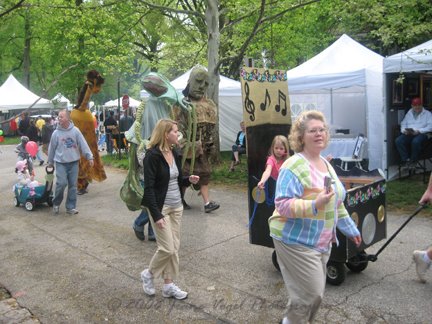
A parade broke out in the middle of the fair Saturday morning!

Oh, yeah. And there’s the Cherokee Triangle Art Fair. This was my first year there and was thrilled to be invited. I was at the St. James Court show in Louisville last October, so I knew that this is a town filled with people who know and love art. I enjoyed an energy and enthusiasm in my booth that I don’t see very often. People here are just plain bubbly and happy!

And they seem to like my work. My new work was especially well received. THANK YOU! We never know if our new work will be embraced or rejected.

One woman, who I just adored, just could not decide! So she got comfortable, spread out her favorites, and started deciding! She whittled it down to three, but she kept going back to a few other. Don’t worry. I’ll be back in October!

Next week: Artfest on Walnut Street in Springfield, MO.

Posted in Art, Fairs, Thank You | Leave a comment

>A Different Direction

>

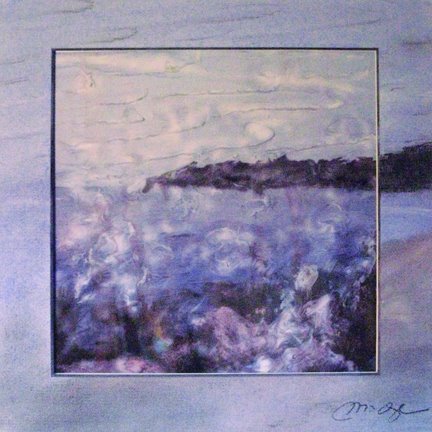
Summer Storm, image extended onto mat in pastel painting, 11×11 inches,
© 2008 by Jeane Vogel

The biggest complaint heard at art fairs is “there’s nothing new. It’s all the same old stuff.”

Sometimes that’s legitimate. There are artists who find a “formula” that works for them and every piece they produce looks the same. There are painters who brag (to other artists — not to the buying public) that they can paint a 4×6 foot panel in about 2 hours. They paint the same thing over and over. It’s production art.

I hate to say this of my colleagues, but there are a handful of photographers who haven’t updated their work in years either. It’s the same images, over and over and over.

Hey, we all need to make a living, but doesn’t that get boring after a while?

We all struggle with keeping our work fresh, vibrant and meaningful — and attractive to patrons. But we have to experiment, grow and stretch if our work is to have any consequence over a lifetime.

This year, I’m starting down another path: pastel painted mats for my hand-altered Polaroid images. I’m showing these mixed media originals for the first time in Louisville next weekend, April 26-27, at Cherokee Triangle Art Fair.

Unlike my limited editions, there’s only one of these. Each is an original pastel painting or drawing. I only have a few right now, so email me at jeane@vogelpix.com if you’re interested in reserving one before the show or to see thumbnails of the whole (limited) collection.

Posted in Art, Fairs, NewWork, Nuts and Bolts, Polaroid, Soap_Box | Leave a comment

>Slow Down

>

Peace, Love, Luck – Variation #1, © 2008 Jeane Vogel, Infrared photograph

Plein aire painters have a huge advantage over photographers. They sit in one place for hours, studying a composition. Removing elements, adding elements. The artist is immersed in the scene.

Photographers used to be like that. Strap 100 pounds of tripod and large format camera on your back, find a composition that appeals to you, set up the tripod, load the sheet – yes, sheet — of film, dig out the focusing loupe, move the tripod a bit, take a light reading, adjust the focus again, set the aperture, open the shutter for several seconds to several minutes — all to realize that you forgot to remove the black slide and nothing was exposed. Start over again.

Now, everyone and his talking parrot with a $150 digicam snaps and moves on. It’s nothing.

I can be the same way. I’ll shoot dozens of shots to get the one I wanted. If I slowed down, I might only need three shots.

To slow down means to think through every step. To slow down means to envision the image before it’s exposed. To slow down means to make fewer mistakes.

All art benefits from a more leisurely pace. Infrared photography absolutely demands it. Infrared is a spectrum of light beyond that seen by the human eye. Because chlorophyll in plants reflects that spectrum, an infrared capture on film or a special digital sensor gives haunting look to plants, leaves and grass. The effect is ethereal.

When shooting infrared, a infrared-blocking filter is used in front of the lens. It blocks out almost all the visible light, which is the point, of course. The infrared spectrum remains. But that means that composing and focusing takes extra time — remove the filter, set up the shot, replace the filter, expose the image.

The exposure times are long, which can add to the mysterious appearance of the image — flowing water, moving people, fluttering leaves are blurred in the 5 to 30 second exposures. Of course, long exposures require a tripod.

A tripod forces a photographer to slow down. To think. To be deliberate.

Infrared photography has the added advantage of pushing the artist’s eye beyond what can be seen and back into a realm of imagination.

Posted in Art, Light, Nature, NewWork, Photography, Technique | Leave a comment

>A Play of Art

>

“Peace Offering,” (c) 2008 Jeane Vogel Photography, Hand Altered Polaroid

Sometimes I will engage a person looking at my work and it’s suddenly clear I have misunderstood. I thought they were looking at my work in awe, but apparently it was confusion — or worse!

The person doesn’t seem to know what to say to me, and they fumble. Occasionally that fumble turns to “Gosh, it looks like you have a lot of fun with your work.”

Well, that’s pretty neutral. Doesn’t sound too bad.

Oh, yes, I love this work! I gush. Then I realize — they’re really trying to get away because they don’t find the work compelling at all. They might not understand, or they might not like it, but they want to be polite — so they unwittingly downgrade my work to something frivolous, frolicsome or lighthearted.

Hey! I want to yell: It’s called a WORK of art, not a PLAY of art. I put some serious effort in here!

Then I realize that the work we do in the studio or in field is supposed to look effortless. I don’t want the technique to show. I want the ART to show. It should look as if I’m having fun.

Maybe it should be called a play of art.

Posted in Art, Nature, NewWork, Soap_Box, Stories | Leave a comment

>Ding!

>

Cosmos II, (C) 2008 Jeane Vogel

I’ve been hearing bells lately.

Ding!

That’s not Southwest Airlines telling me I’m free to move about the country.

That’s the sound of rejection.

Ding!

It’s a fact of life of artists — and most everybody else, I suppose. Rejections happens. What you do with it determines how successful you are and how much character you have.

I must have character in droves these days.

Ding!

All year long I apply to juried exhibits, galleries, residencies, art fairs. I get accepted to quite a few. I have two exhibits hanging right now, one a solo show of selections from the St. Louis and
White series hanging in the Board of Aldermen’s meeting room at St. Louis City Hall. Still, like most artists this time of year, I have dozens of applications pending. I’m being quite selective with art fairs this year and have eight excellent shows already booked.

It works like this: I decided to apply for an exhibit or art fair. I select what I think are my best three or four images and send them off, either on slides or digital images. 500 – 2,000 other artists are doing the same thing. For the same show. That has only 100 or so spaces available. There are thousands of us competing for a few dozen spots. Most of us are pretty good. My competition is a little steeper because there are more photographers than other 2D artists. Sometimes there are 50 photography applications for every available spot in an art show. There are hard choices to be made.

Outstanding artists are rejected. Bad ones too. Can’t tell the difference from the letter, though!

Ding!

Honestly, I don’t get rejections every day, but I got three in a row last week. That pinched. Lots of times I get acceptances.

For three years I’ve been hearing from patrons and other artists that I should be in the Belleville art fair in May — Art on the Square. Well, sure I should! So should every other good artist. We all think we should be in the best shows.

Almost since the day it opened six years ago, it has been consistently ranked the best in the country. No kidding. Everybody wants in this show. Lots of people get dinged. From all over the country, the best artists come to display and sell.

Every year I apply and wait for the rejection, all the while hoping that this will be the year.

Oh my gosh! This IS the year! I was so thrilled to get into Belleville. I am psyched! I read the letter three times. Brilliant art connoisseurs, those Belleville jurors!

So…. if I can get into Belleville, maybe I can get into Prairie Village outside of Kansas City.

Ding!

I still had hopes for Clayton — one of the best in the country. I gripped the Belleville acceptance letter like a talisman.

Ding!

Well surely I can get into Art and Air in Webster Groves. I did that show the first three years. The Belleville letter had been filed away by this time.

Ding!

Acceptance is fleeting and rejection lingers. How much character do I need?

A little more, apparently. The life of an artist is about tenacity, inner vision, confidence and the support of friends and family.

Oh wait. That’s everybody’s life!

Posted in Art, Exhibits, Fairs, Humor, NewWork, Nuts and Bolts, Polaroid, Stories | 1 Comment

>You Can’t Do THAT!

>What do people need so many rules? Especially artists? Are we supposed to be the ones who are allowed to think beyond convention?

Ok, sure. Don’t poke your studio mate with an Exacto knife. That’s a good one. Don’t drink the glaze. Don’t mess with any body’s else’s art… EVER. Good rules.

My daughter has an art teacher who is constantly telling her that she’s doing something wrong. Don’t use that color. This element belongs over here. If you shape the ears like this it’ll look better. Apparently this teacher believes that every project in the class should look the same. Talk about sucking the life out of learning! How many kids in THAT class will need therapy during college?

Art should be about expressing and experimenting and creating. Rules? Bah!

My dear friend and amazing sculptor Ilene, an MFA candidate, is preparing five pieces for a crit. Working in concrete, she needs to make some plates as part of a much larger piece. She could use a mold, but she wants them to look thrown — more organic, more natural. She asks: can I throw concrete on a wheel?

Why not?

I need a new plate rib though, so she heads to our friendly neighborhood clay retail studio. She tells them what we’re planning. You can’t do that!

Oh please. It’s my favorite thing to hear. Tell me I can’t do something and I’ll find a way. It’s not that I’m stubborn or obstinate (HEY! I saw those eyes roll!!!), but I love finding new ways to do things. Actually, I love working with new media, seeing what can be done.

We humans tend to put people in little boxes: he’s a lawyer, she’s a soccer mom, they’re gay. The assumptions build from there. Most people are so much more. Can’t we be more than one thing? Can’t artists work in more than one medium?

So we threw the concrete. We took a more experienced potter’s suggestion to throw a plate of clay first. After drying it in the sun for a couple of hours (it didn’t even crack! How did that not happen!) we poured in the concrete and threw! She made me wear gloves and I HATED that sensation. I need to feel the texture of the medium on the wheel. I was pretty sure my skin would grow back.

Ilene emailed me this morning that one of the two we threw turned out beautiful! One was a little thin and cracked. We learn. We do it again.

See, you CAN do that!

Posted in Art, Artist_Friends, NewWork, Soap_Box, Technique | Leave a comment

>Watching the Death of a Film

>

Palm, Variation #2, (c) 2008 Jeane Vogel

I spent the weekend in the studio, working on new images. I have exactly 32 fresh pieces of Polaroid film left. 32. From that I might get 10 new images to add to my body of work. Maybe.

I used up 15 pieces this weekend.

The film I use for hand-altered Polaroids, my medium of choice, is SX-70. They stopped making it in December 2005. Like lots of other artists, I started stock-piling. The price soared but I bought as much as I could afford.

Sure some is still available on EBay, but film is finicky. Treat it wrong and it turns on you. The good film I have has been handled right, kept in the fridge until needed. It’ll last forever there. I have some other film that has heat damage. I might never be able to use it professionally. I don’t trust EBay film at all.

I used to go throught 10-12 pieces to get an image I was happy with and with worth adding to the body of work. Like most artists, I’m very picky and harder on myself than any critic or juror. I see every flaw. I want it to be perfect. Let’s shoot it again! It’s easy to make a mistake when working in this technique. I’m working directly on the emulsion of the film — that very thin, delicate, light sensitive layer that makes photography possible. Get distracted for a minute and your image is torn and ruined.

I don’t mind when someone looks at the work and casually suggests that I just “smear” and “smoosch” the emulsion to get the look I want, like some kind of primitive finger painting. Many people seem to think that I just spread the emulsion around and see what I get. Instead I try to explain that I use different tools for different effects, and some effects have to be obtained at specific times of the developing process. The process is very controlled and deliberate. I know exactly what effect I will get.

It doesn’t matter. Either you like the impact of the image or you don’t.

I love it. Sure you can try to get this effect in PhotoShop, but you won’t. The film is too organic and subtle. PhotoShop will not get these results.

Besides, the result is only as good as the process. In this case, the process for me is transformative.

Polaroid announced a couple of weeks ago that all of it’s film will be discontinued. All the Polaroid alternate process art forms are going away.

I get asked what I will do next? Develop another body of work, of course. The tool might be going away but the vision is still there. Fortunately, that can’t be discontinued just yet.

PS. The Palms, Variation #2 is in honor of dear friends Renata and Jerome. These are date palms, and I shot them outside their front door. I’ve been working on the image for a while now, and finally finished it this weekend. Instead of being in the studio, I was supposed to be at their house in Palm Springs, but ice and snow canceled all flights and made the trip impossible. I also missed seeing equally dear friends Hildy and Dimitri, who were driving up from Tucson just to see me. I miss them all. Next time.

Posted in Nature, NewWork, Nuts and Bolts, Polaroid, Stories, Technique | Leave a comment

>Your Artist Statement is WRONG!

>

Sand Castle, (c) 2007 by Jeane Vogel, Infrared Photograph

Excuse me?

He repeated it: Your artist statement is wrong!

Wrong? It’s an artist statement! It’s my interpretation of my own work. It’s my opinion! The only way it could be wrong is if I were lying!

No, he said. I disagree with it.

How can you disagree with an artist’s statement? But he did. He took issue with my premise: Photography does not capture a moment. Photography captures the essence of the moment.

I have to explain this a lot. Of COURSE it captures the moment, I’m told, with a look that continues: Are you an idiot? Perhaps. But I stick with my statement. A snapshot might capture a moment. A photograph captures far more — more than we can see, sometimes more than we can feel.

Posted in Art, Nuts and Bolts, Photography, Soap_Box, Stories | Leave a comment